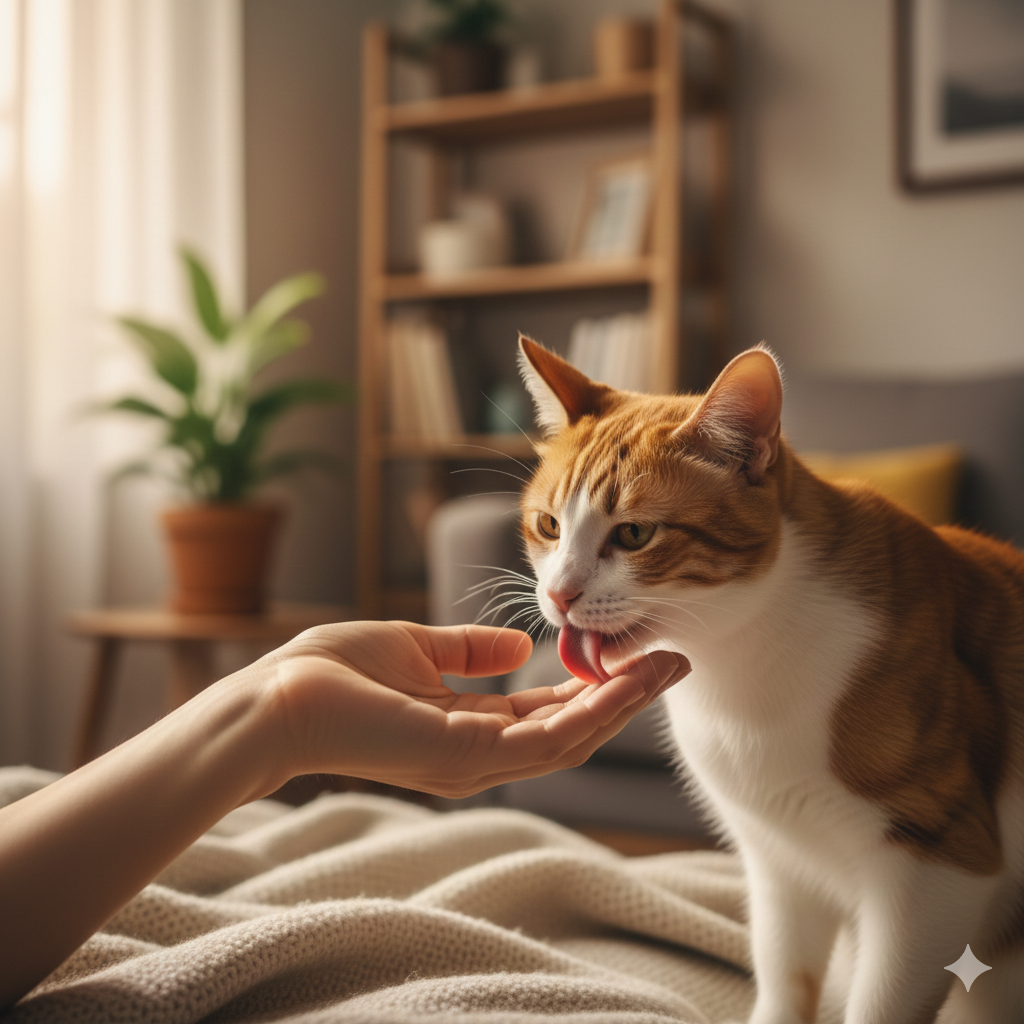
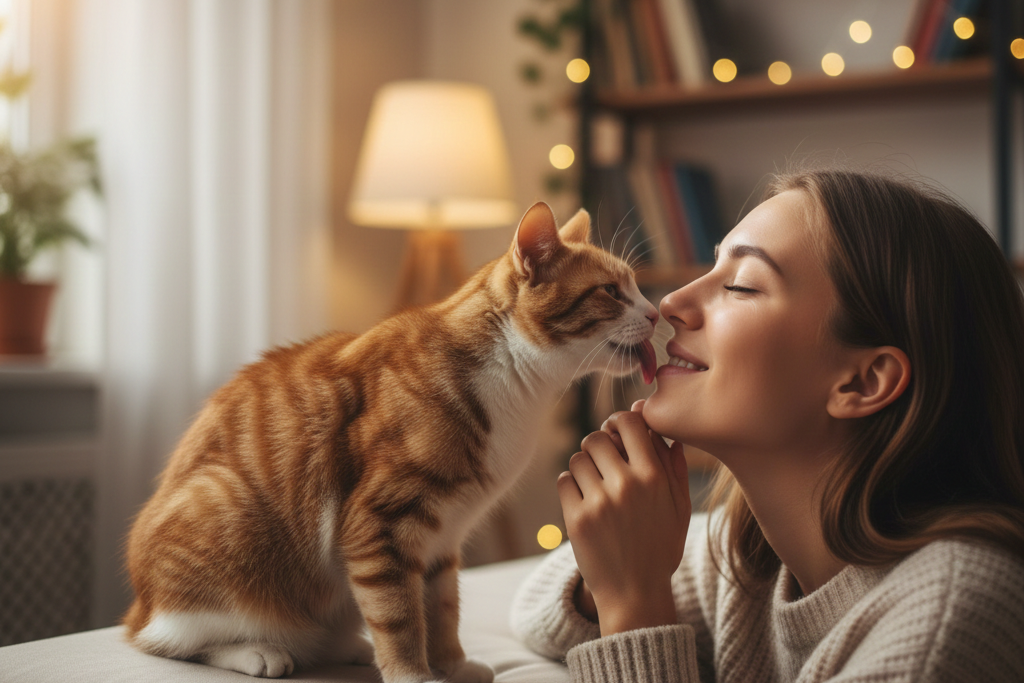
Cats are often known for their graceful independence and mysterious ways — but one behavior that consistently puzzles and delights owners is when a cat licks a human companion. While this action might look like a simple expression of affection, it actually has deeper roots in feline social behavior, identity marking, and emotional communication.
Unlike dogs, cats don’t lick as often or as overtly affectionate creatures — but when they do groom humans, they are often engaging in a behavior with multiple meanings that can tell us a lot about the relationship between cat and owner. Researchers and animal behaviorists explain that licking can be an extension of instinctive grooming habits and social bonding rituals.
What Licking Represents in Cat Communication
🐾 Social Origins and Feline Bonding
Cats groom each other in a behavior called social grooming or allogrooming, which serves both hygiene and relationship-building purposes. Mother cats groom their kittens to clean them and reinforce emotional bonds. Adult cats that extend this grooming to another cat are indicating trust and close social ties.
When a cat licks a human, some experts see this as a sign that the cat is including the owner in its social circle — much the way it would with trusted feline companions.
Common Reasons Cats Lick People
🐱 1. Affection and Social Bonding
Cats often lick people as a form of social bonding, similar to how they groom other cats they trust. In feline groups, licking helps create shared scent associations and reinforces connections. When cats do this with humans, it may be a sign that they view their owner as part of their “family.”
👃 2. Territory Marking Through Scent
Cats have scent-producing glands and use various behaviors, including rubbing and licking, to mark territory and scent. By licking their owner, cats may subtly deposit their scent on the person — indicating familiarity and a sense of shared belonging.
🔍 3. Curiosity About Taste or Smell
Human skin often carries traces of sweat, lotions, or odors that attract a cat’s keen sense of smell and taste. Some cats lick because they are exploring intriguing sensory cues on the human’s skin.
🧠 4. Seeking Attention or Comfort
Cats quickly learn which actions get attention. If licking results in petting or interaction, cats may repeat the behavior to engage with their owners.
😌 5. Calming or Comforting Behavior
Licking can also help cats feel calm and secure. In stressful situations, cats may lick to self-soothe — releasing feel-good hormones in the process — and this may extend to interaction with a trusted human companion.
When to Be Concerned
Although occasional licking is normal, excessive licking — especially if paired with anxiety, compulsive grooming, or other behavioral changes — may warrant veterinary consultation. Owners should monitor changes in behavior that could indicate stress, discomfort, or medical issues.
Cat licking is a rich and interactive form of feline communication. Whether it’s a gentle expression of trust, a shared scent marking, or a way to seek attention and comfort, licking reveals much about the emotional bond between cats and humans. By interpreting licking in context, owners can better understand their feline companions’ needs and strengthen the connection they share.