

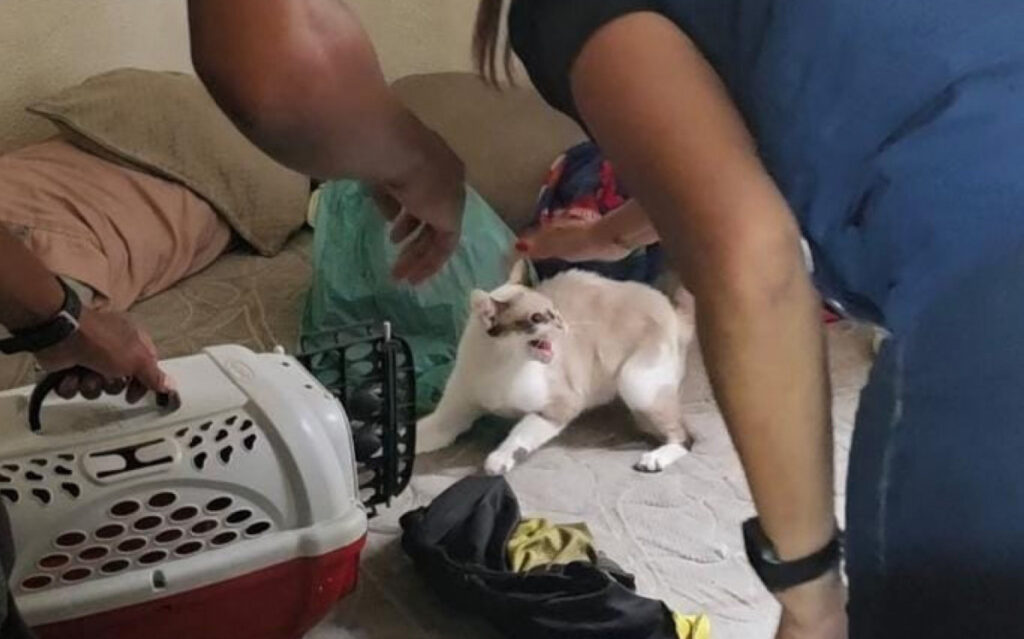
Six cats living in unsanitary conditions inside an apartment in Rocha Miranda, in the North Zone of Rio de Janeiro, were rescued on the afternoon of January 22, 2026, by the Municipal Secretariat for Animal Protection and Defense. The operation followed complaints from neighbors concerned about the welfare of the felines and the state of the home.
In addition to the animals’ plight, the case involved a complex human scenario: their owner, a 70-year-old woman, was hospitalized after suffering a stroke (CVA) caused by an assault allegedly committed by her own son.
Conditions Found and Authorities’ Comments
The acting Secretary of Animal Protection and Defense, Jeniffer Coelho, described the apartment as extremely unsanitary, with waste and filth covering large parts of the home, posing risks to both animals and humans.
“The environment was completely unsuitable for animals and humans. We found a very sad situation. A family living with a drug user does not live — they survive,” Coelho said, highlighting the broader vulnerability of the household.
Family and Social Context
Authorities say the cats had been alone in the apartment since the owner’s hospitalization. The woman’s son, described as a recycler and drug user, was not present when rescuers arrived. Neighbors reported that he only appeared sporadically and had a history of aggression toward his mother. Despite this, the woman hesitated to file charges against him, officials said.
Where the Cats Were Taken
After being rescued, the cats were transported to Fazenda Modelo, an animal shelter in Guaratiba, West Zone of Rio de Janeiro, where they will receive veterinary exams, care, and sterilization as part of standard protocols. Once healthy and ready, they are expected to be placed up for adoption.
Neglect and Public Policy
Cases of animal neglect inside homes, especially those linked to vulnerable situations, highlight the need for integrated public policies that connect animal welfare with social support services. The combined efforts of rescue teams and social workers illustrate how communities can intervene to protect those who cannot advocate for themselves.
Tips for Cat Care and Prevention
Animal welfare experts emphasize the importance of ensuring pets have:
- Clean and safe environments
- Fresh water and food regularly
- Ongoing human supervision
- Routine veterinary care
Long absences and lack of proper care can lead to malnutrition, disease, stress, and behavioral problems in domestic cats
The rescue operation in Rocha Miranda underscores the critical role of community awareness and responsive animal protection systems in preventing neglect and safeguarding pets. Thanks to quick action and cooperation between neighbors and authorities, six cats were removed from a dangerous situation and given a new chance at health and happy futures.